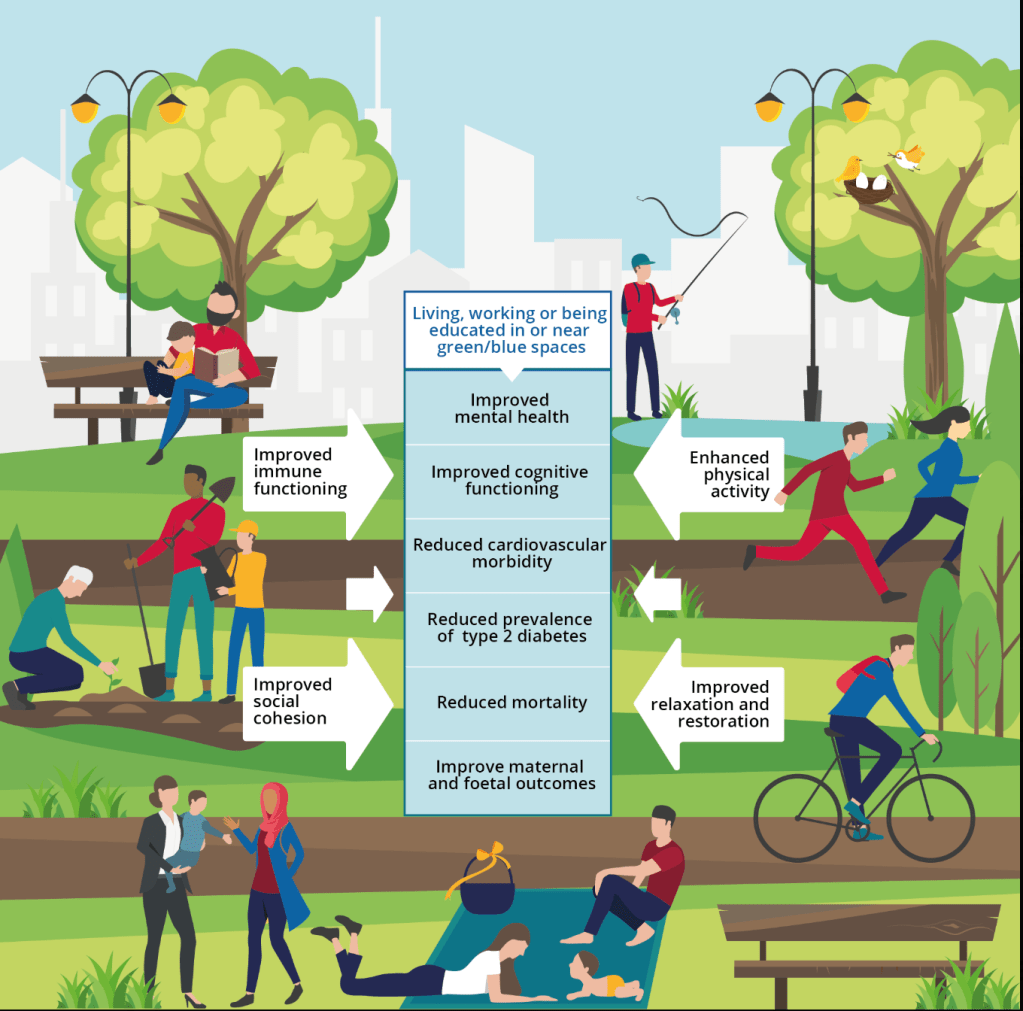
As cancer survivorship becomes a longer journey for many, the focus is shifting from merely surviving to truly living well after treatment. A recent study published in Health & Place sheds light on an unexpected ally in this journey: urban greenspace.
Key finding: Breast cancer survivors who lived near urban greenspace experienced a longer time to their first major cardiovascular event (MACE) after receiving cardiotoxic treatment.
Greenspace as Preventive Medicine
Cardiotoxic cancer treatments, such as certain chemotherapies, can increase the risk of heart disease. Yet something as simple as access to green environments—tree-lined streets, parks, or urban gardens—may help buffer these effects. The study suggests greenspaces can reduce stress, promote physical activity, and support better cardiovascular outcomes.
A Matter of Access and Equity
Not all communities benefit equally. The research highlights that non-Hispanic Black women had less access to urban greenspace and experienced higher rates of cardiovascular complications. This underscores the importance of urban design that prioritizes health equity, particularly for those recovering from chronic illnesses.
Nature as Part of Cancer Recovery
Survivorship care often focuses on medication, monitoring, and counseling—but rarely on the environments that shape healing. Encouraging time in nature, and designing cities with green access in mind, could be a cost-effective and life-enhancing addition to post-treatment support.
References:
- Gunasekara, A. et al. (2025). Urban greenspace and time to major adverse cardiovascular events in breast cancer survivors. Health & Place.
- Image credit: European Environment Agency (2020), Urban Green Infrastructure.




Leave a comment